



Home > Printing News and Printing Knowledge > Printed Paper Books and E-books: A Coexisting Reading World
Printed Paper Books and E-books: A Coexisting Reading World
Published Time:2026-10-12 Original Source:Printed Paper Books and E-books: A Coexisting Reading World
With the rapid development of digital technology, e-books have gradually stepped into every corner of people's daily lives. We can easily carry thousands of reading materials in a slim smartphone or e-reader, and finish reading during the commute, in the waiting room or during a short break. This convenience once made many people predict that printed books would soon disappear from the market.
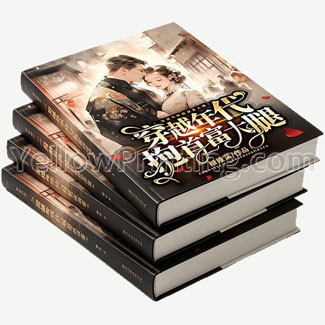
However, printed books have never faded out of our sight. They bring a unique sensory experience that no digital device can replicate: the soft touch of paper, the faint scent of ink, and the gentle sound when you flip a page. Many readers still prefer to mark lines in physical books, write down their random thoughts in the blank space, and leave their own reading traces on the pages. For deep reading that requires full concentration, printed books can help people stay away from the distractions of pop-up messages on screens and immerse themselves completely in the content.
In fact, these two forms of reading are not mutually exclusive. E-books are perfect for fragmented reading, fast information searching and travel carrying, while printed books are more suitable for in-depth reading, collection and quiet reading time. They each have their own irreplaceable value, and together they build a richer and more diverse reading world for us. Many people now have formed a balanced habit: they use e-books to finish light readings on busy weekdays, and sit down with a carefully selected printed book on weekends, enjoying the slow and peaceful time that belongs only to themselves.
Printed Paper Books vs. E-books: A Practical Comparison of Real-World Pros and Cons
If we look past the usual "taste of ink" vs. "portability" talking points, printed books and e-books show very different strengths and weaknesses when we examine them through the lens of real daily usage.
For printed paper books, the biggest underrated advantage lies in their zero-learning-curve physical logic. You never need to update software, charge a battery or connect to Wi-Fi just to open a page. The natural rhythm of flipping pages lets your brain map content to specific physical locations in the book, making it far easier to recall exactly where a key argument or favorite quote was written months later. This physical memory effect is something no digital bookmark system can fully copy. But their downsides are equally obvious: a full home bookshelf takes up valuable living space, and carrying three or four novels on a trip will quickly wear out your shoulder. It is also impossible to instantly look up a new word or pull up related background information without putting the book down and picking up another device.
E-books, by contrast, shine in their flexible, adaptive functionality that fits every modern lifestyle. You can adjust font size, line spacing and screen brightness to perfectly match your eyesight and the current lighting condition, which is a lifesaver for readers with poor vision. The built-in search function lets you locate a specific name, date or term across an entire 1000-page academic work in less than a second. Yet their biggest flaw is not just eye strain — it is the invisible cognitive interruption. Most people cannot help glancing over at pop-up notifications, switching to social media for "just one minute" and breaking their reading flow entirely. Even on distraction-free e-readers, the lack of physical page thickness makes it much harder to track your reading progress intuitively, and many people end up abandoning half-finished e-books far more often than they do printed ones.
At the end of the day, neither format is universally better. Printed books reward deep focus and long-term memory building, while e-books maximize convenience and information efficiency. The best reading experience almost always comes from choosing the right tool for the specific content and scenario, rather than sticking blindly to one single format.