



Home > Printing News and Printing Knowledge > How the Internet Has Reshaped the Modern Printing Industry
How the Internet Has Reshaped the Modern Printing Industry
Published Time:2026-10-27 Original Source:How the Internet Has Reshaped the Modern Printing Industry
## How the Internet Has Reshaped the Modern Printing Industry: From Traditional Workshops to Smart Digital Services
For hundreds of years, the printing industry stood as one of the most stable and unchanged sectors in the global manufacturing system. From early letterpress workshops to large offset printing factories in the late 20th century, the core logic of the business never shifted: mass production drove down unit cost, long lead times were unavoidable, and large volumes of physical inventory were a basic requirement for daily operation. But over the past 20 years, the rapid spread of the internet, paired with the rise of digital printing technology, has not just added new tools to this old industry — it has rebuilt every part of its value chain, from customer ordering and design to production, delivery and after-sales service. Today, the global printing industry is no longer a purely manufacturing-driven sector. It has evolved into a highly connected, service-focused ecosystem that mixes digital technology, personalized user demand and sustainable production practices.
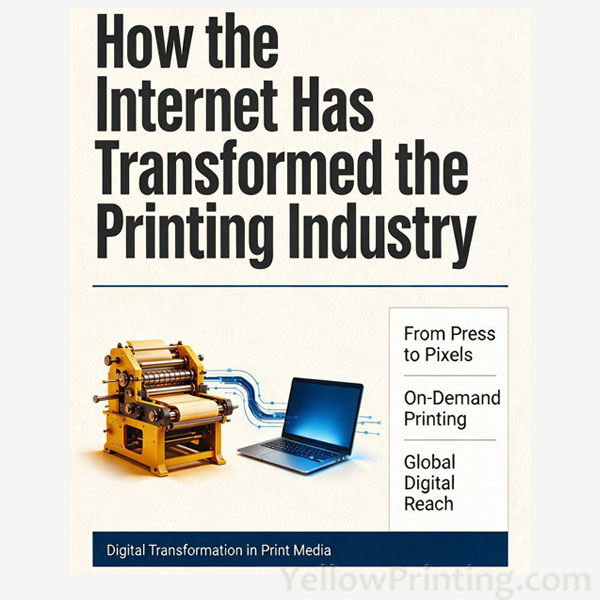
## The rise of Web-to-print: breaking the old barriers of minimum order requirements
Before the internet became widely used, most commercial printing businesses ran on a very simple business model. Print factories set strict minimum order rules, usually requiring customers to order at least hundreds or thousands of copies for any single job. This system worked perfectly for large publishers, big brand companies and government clients, but it locked out a huge group of small users: small local shops that only needed 50 custom flyers, independent authors who wanted to test their new book with a small group of readers, and ordinary families who hoped to turn their travel photos into a printed album. These small customers could almost never get fair pricing or fast service from traditional print shops.
The **Web-to-print (WTP)** model completely broke this long-standing barrier. Today, almost every modern printing business runs a fully functional online platform. A customer can visit the website at any time of day, select their preferred product type — from business cards and brochures to custom packaging and wall posters — pick their paper thickness, finish style and delivery speed, upload their design file, and place a full order in less than 10 minutes. The system will automatically run a full pre-check on the uploaded file: it verifies color mode, resolution, bleed settings and font embedding, catches common mistakes that used to cause costly reprints, and generates an accurate, transparent price in seconds.
Once the order is confirmed, the platform will automatically send all production data directly to the nearest available print facility with spare production capacity. This process removes almost all unnecessary manual steps, cuts down communication errors, and makes small-batch, low-volume printing both affordable and fast. Even "one-piece custom printing" — once unthinkable for traditional factories — is now a standard, widely available service across the industry. This shift has also given birth to the fast-growing **on-demand printing** market for books, which allows publishers and independent authors to print books only when a customer places an order. This eliminates the need for huge warehouse storage, cuts down massive inventory waste, and keeps niche, low-demand books that would have gone out of print decades ago available to readers all over the world.
## Cloud printing and AI tools: making professional design accessible to every user
Before the internet era, creating a print-ready file was a highly specialized job. Customers usually needed to hire a professional graphic designer, spend days or weeks adjusting layouts, and send large files back and forth through in-person visits or slow email attachments. This process was expensive, time-consuming, and often frustrating for small business owners and individual creators who did not have professional design experience.
Today, cloud-based design tools and AI-powered print assistants have changed this situation completely. Thousands of free, ready-to-use templates for business cards, event posters, product packaging, wedding invitations and marketing materials are hosted on cloud servers. Users can open their browser, pick a template that matches their brand style, edit text, adjust colors, and replace images in minutes, without installing any professional design software on their own computer. AI design tools can even generate a full set of brand visual materials from a simple text description, and automatically adjust every file to meet strict printing standards.
For printing factories themselves, **cloud printing** management systems have connected every single machine, every production station and every warehouse location into one shared digital network. Production managers can view real-time data on every ongoing order, track the running status of every press, arrange automatic production scheduling, and adjust workflow dynamically when unexpected delays happen. This level of full transparency was impossible in the old offline workshop era. It greatly improves overall production efficiency, reduces machine idle time, and helps factories cut down unnecessary material waste by up to 30% in many cases.
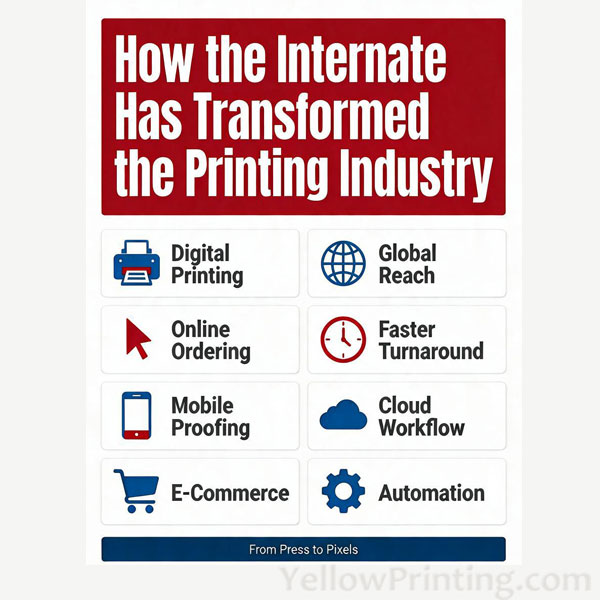
## Cross-regional platform collaboration: erasing the old limits of geographic service
For most of its history, the printing industry was an extremely local business. A small print shop in a city could almost only serve customers living within 5 to 10 kilometers. Customers usually visited the shop in person, checked physical sample books, and discussed their printing needs face to face. This geographic limit meant that small, high-quality print studios with advanced technology could never reach a large enough customer base to grow quickly.
The internet has completely erased this geographic boundary. Today, a small custom print studio based in a small city can receive orders from users all over the country through national online print platforms. These platforms use big data to match different customer needs with the most suitable local production facilities: a large batch of packaging boxes will be sent to a factory that specializes in corrugated board printing, while a high-quality art photo book will be sent to a workshop that focuses on premium fine art printing. This intelligent matching system ensures that every customer gets the best possible product quality at the most reasonable price.
Many large group customers now also benefit greatly from this connected system. A national retail brand with hundreds of branch stores across different cities can use a unified online print platform to order all their in-store posters, price tags and promotional materials. The platform ensures that every branch gets products with exactly the same color, exactly the same paper quality and exactly the same unified price, which removes the trouble of inconsistent quality from different local suppliers and cuts down the group's overall management cost significantly.
## The new era of personalized custom printing: turning one-size-fits-all into tailored experiences
As consumer habits changed over the past 10 years, more and more users no longer want generic, mass-produced printed products. They want items that carry their own personal stories, their unique brand personality, or special cultural meaning. This trend has turned **personalized custom printing** from a tiny niche market into one of the fastest growing segments of the entire printing industry.
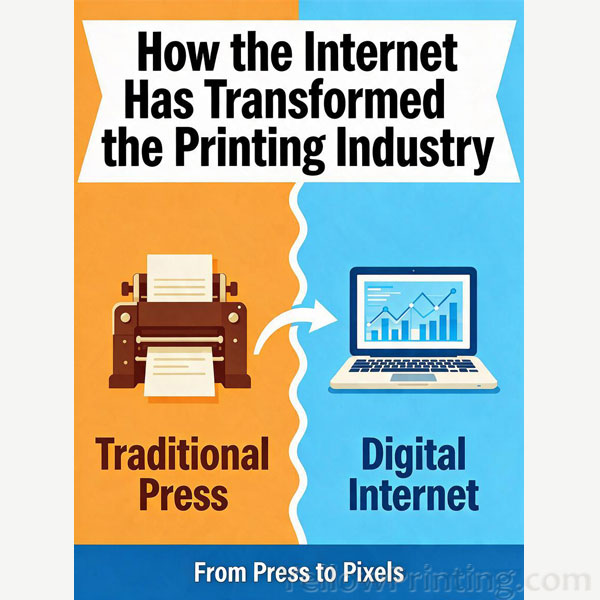
With internet-connected digital presses and flexible production workflows, printing businesses can now easily handle jobs where every single piece in the same order is different. A school can order graduation certificates with a different student name and photo on every single one, a brand can run a marketing campaign that prints unique customer names on every product package, and ordinary users can order custom photo books made from their own family travel pictures. All of these services can be completed at a very low cost, without the expensive plate-making process that traditional offset printing requires.
Many forward-looking printing companies have gone even further, adding new value-added services on top of their printing products. They use RFID tags and AR technology on custom packaging, so that when a customer scans the package with a smartphone, they can view exclusive behind-the-scenes content, join promotional activities, or check the full authenticity information of the product. These new services turn a simple printed package from a passive protective item into an active interactive connection point between brands and consumers.
## Conclusion: the internet did not replace printing — it made it stronger
There was once a widespread worry that the internet would make printed media disappear completely, that digital screens would replace every book, every newspaper, and every physical printed product. But 20 years of real industry development has proven the exact opposite. The internet did not kill the printing industry. Instead, it removed many of the old industry's long-standing pain points: high minimum order limits, long delivery times, limited geographic reach, and high barriers for small users.
Today, the modern printing industry is no longer a low-margin, purely manufacturing business. It is a smart, technology-driven service ecosystem that combines online ordering, AI design tools, cloud production management, and personalized user experience. As digital technology continues to develop, the combination of the internet and printing will only become deeper, creating more new possibilities for both businesses and ordinary users in the years ahead.